Is a Button or a Sensor Better for Handicap Doors?
Modern automatic doors typically rely on an automatic door opener powered by an automatic door operator, also commonly called a door opener. That operator is the motorized mechanism that moves the door, often installed above the doorway. The operator can be triggered in different ways, and the two most common are a push button, including handicap push buttons and push plates, or a motion sensor.
How an Automatic Door Opener Works With a Swinging Door
In South Carolina, most accessible retrofit systems are used on these doors because many buildings already have hinged doors installed. The automatic door operator is mounted at the top and connected to the door so it can open and close smoothly.
For a typical setup, installers check the door frame, hinges, clearances, and alignment to make sure the door can move freely without scraping or binding. Even small issues like a slightly warped door frame can make an automatic door opener feel slow or inconsistent.
Push Button and Handicap Push Buttons
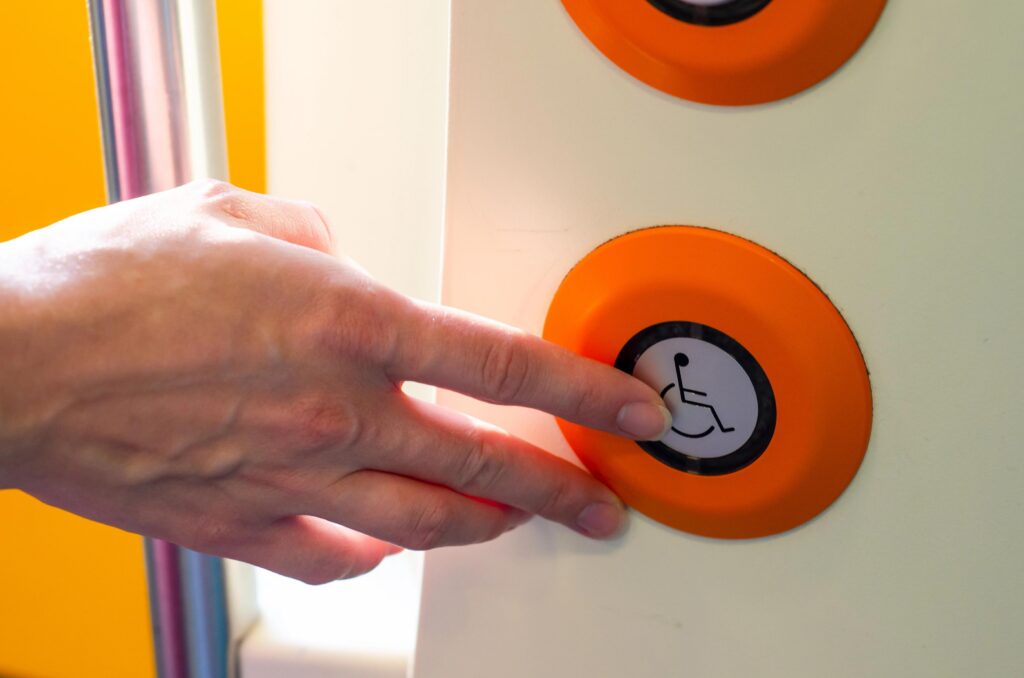
A push-button system is the most intentional method of activation. The user presses the push button, the signal goes to the door opener, and the door opens. In accessibility focused installations, these are often labeled handicap push buttons and may be designed as larger push plates that are easier to activate with a palm, fist, elbow, or mobility device.
In many real-world environments, that predictability is the biggest advantage. A person using a wheelchair may need an extra moment to line up straight, or someone with a cane may prefer to stop, stabilize, and then activate the opening cycle. With handicap push buttons, the door opens when the user is ready.
Motion Sensor Activation for Automatic Doors
This sensor offers hands-free operation. Instead of searching for a control, the user approaches, and the sensor triggers the automatic door opener. This can be helpful for disabled people who have limited hand strength, pain in their hands, or difficulty reaching and pressing controls. It is also convenient in settings where people carry bags, push carts, or move quickly through entrances. In theory, sensor-based automatic doors feel seamless. You approach, and the doors open.
In practice, sensors require careful tuning. A motion sensor can detect movement that is not actually intended to enter, like people walking past the doorway or activity in nearby corridors. That can cause repeated opening cycles, which increases wear on the door operator and can make the environment feel unpredictable. Sensor zone placement matters a lot for people with limited mobility who may approach more slowly or from a different angle. If the detection area is too short, it may not trigger early enough for a wheelchair user to pass comfortably. If it is too wide, it may trigger constantly.
Accessibility Standards
Whether you choose a push button or a sensor, the full doorway experience must align with accessibility standards. It is not just about being able to trigger the opener. It is also about whether a person can approach, activate, and pass through safely. Meeting accessibility standards typically involves ensuring adequate, clear space for wheelchair maneuvering, appropriate timing so the door stays open long enough, and safe operation so the door does not create hazards for slower-moving users.
It is also worth noting that accessibility is not only for wheelchair users. Limited mobility can include seniors, pregnant people, those recovering from injuries, and people with temporary disabilities. What works best is often what reduces effort and confusion while keeping door movement predictable.
Installation Considerations
If you plan to install automatic doors, the decision between handicap push buttons and a sensor should be made alongside the hardware plan. The automatic door operator must match the door type and traffic needs, and the condition of the door matters. Installers should inspect the frame, hinges, and the swing path for potential conflicts. Even the location of the door handle and how people naturally reach for it can affect where activators should go.
For a swinging door, push button placement should allow someone to press and then move forward without being struck by the door’s arc. For sensor activation, the detection zone should be aligned with how people approach, so it triggers reliably for different speeds and heights, including wheelchair users. A good install is not just wiring a device. It is designing the experience of how disabled people and people with limited mobility open doors, move through entrances, and exit buildings safely.
The Answer to Your Question
In many buildings, the most reliable baseline is a push-button setup with well-placed handicap push buttons or push plates because it is intentional, predictable, and easier to control in tight spaces. In high-traffic public entrances, a well-tuned motion sensor can improve flow and reduce the need to touch surfaces, but it must be calibrated carefully to avoid false triggers and timing problems.
The most practical answer to whether a button or a sensor is better for handicap doors is often a hybrid approach. Many facilities use sensors for hands-free convenience and still keep a push button as a dependable backup. That combination supports more user preferences, improves reliability, and helps with meeting accessibility standards across a wider range of real-world scenarios.