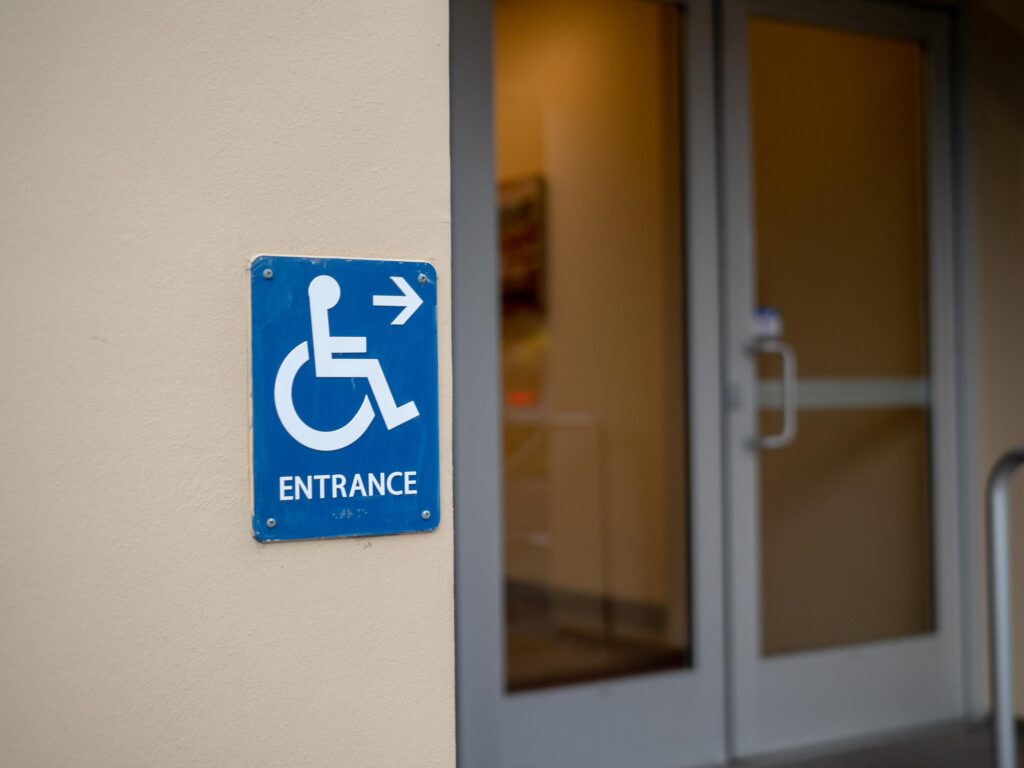
Are You Required To Have A Handicap Door?
The short answer to your question is not always in the way people think. The Americans with Disabilities Act does not actually use the phrase handicap door as a technical term. Instead, it focuses on accessible entrances, accessible doors, and ADA-compliant doors that allow people with disabilities to enter, move through, and use a space safely. So, while not every building must install automatic doors, many commercial doors still need to meet ADA standards, ADA door requirements, and other accessibility requirements in order to support ADA compliance.
What The Law Actually Requires
The real question is not just whether you are required to have a handicap door, but whether your entry door and other doors meet ADA requirements. In new construction, at least 60 percent of public entrances must be accessible, and those accessible entrances must comply with the technical rules for clear width, maneuvering space, hardware, and operation. In altered spaces, if an entrance is being changed, it generally must be made accessible to the maximum extent feasible. For existing doors in older facilities, the ADA often uses a readily achievable standard, which means barriers should be removed when they can be done without much difficulty or expense.
Are Automatic Doors Mandatory
This is where many property owners get confused. Automatic doors are not automatically required just because a building needs to be ADA-compliant. The ADA standards make clear that doors are not required to be automated, but if automatic doors or power-assisted doors are provided, they must comply with the applicable rules. That means you do not always have to install automatic doors to satisfy the disabilities act.
However, if a heavy manual door makes access difficult, automation may be the smartest practical fix, especially at busy accessible entrances or public entrances where people need an easier way to open the door.
The Door Features That Matter Most
In many cases, ADA-compliant doors are about design details rather than just whether they open by themselves. Accessible doors need enough clear width, usually at least 32 inches, so wheelchair users can pass through. Door hardware must be usable with one hand and cannot require tight grasping, pinching, or twisting of the wrist. There must also be clear floor space so someone can approach and operate the door safely.
These ADA guidelines apply to many types of doors, including interior accessible doors, interior hinged doors, swinging doors, sliding doors, folding doors, and sliding and folding doors. Even tempered glass doors and other modern exterior doors still need the right hardware and maneuvering space to support accessibility.
Opening Force And Closing Speed
Another major part of ADA door requirements is the opening force. For interior hinged doors and sliding or folding doors, the maximum opening force is generally 5 pounds, not counting the force needed to retract latch bolts. Fire doors are different because they follow the minimum opening force allowed by the appropriate authority. Exterior doors are also treated differently.
Some guidance notes a typical maximum opening force for exterior doors ranges from 8.5 to 10 pounds, but local governments may impose their own limits. Closing speed doors matter too. Doors with closers should move slowly enough to be safe, and spring hinges must also be adjusted properly.
Common Door Accessibility Issues
Some of the most common accessibility issues are easy to overlook. A manual door may technically exist on an accessible route, yet still be too heavy to use. Door hardware may be mounted correctly, but still requires tight grasping. The push side of swinging doors can also create problems if the lower surface catches mobility aids.
Businesses also run into trouble when doors have closers set too aggressively, when spring hinges pull too fast, or when an entry door is narrowed by frame conditions so the required clear width is lost. These problems can all affect ADA compliance, even when the building owner believes the opening looks accessible at first glance.
When Installing Automatic Doors Makes Sense
Even though the ADA does not always require businesses to install automatic doors, there are times when it is the best solution. Heavy exterior doors, high-traffic commercial doors, and facilities serving a wide range of visitors may benefit from automatic doors or power-assisted doors because they create a more reliable, accessible means of entry.
Final Thoughts
So, are you required to have a handicap door in South Carolina? Not necessarily an automatic one. But if your building serves the public, you are very likely required to provide accessible entrances and ADA-compliant doors that meet ADA standards for width, hardware, operation, and usability. The safest approach is to think beyond labels and focus on whether people can actually use the door.
If your entry door is hard to operate, if your door hardware does not meet ADA guidelines, or if common door accessibility issues are getting in the way, then it is time to review your doors for ADA compliance. In many buildings, the question is not whether you need a handicap door, but whether your current doors truly provide access.